Moss doesn’t announce itself. It lands quietly on your roof and by the time you notice the green creeping across your shingles, it’s been lifting edges, trapping moisture, and rotting the decking underneath for months. Homeowners who ignore it don’t just face a cleaning bill; they face premature roof replacement, structural repairs, and in some cases, interior water damage that costs far more than the roof itself. The Pacific Northwest’s persistent rainfall, dense tree cover, and year-round humidity make this region one of the harshest environments for traditional roofing materials in the entire country.
At S&S Roofing, we’ve spent four generations watching moss destroy roofs that could have lasted decades longer, and we know exactly what stops it.
This blog breaks down why moss is such a destructive force in this climate, what makes metal roofing fundamentally different from every other material, and what Pacific Northwest homeowners need to understand before their next roofing decision.
Why Moss Becomes a Serious Roofing Problem in the Pacific Northwest
Most people think moss is a surface-level problem. It isn’t. Here’s the real sequence of damage:
Moss spores settle on your roof, anchor into the porous surfaces, and begin to hold moisture against the roofing material 24/7, even on dry days. Over time, this sustained moisture causes shingles to curl and crack, wood decking to soften and rot, and structural integrity to quietly deteriorate. Mold and moss roof growth also voids manufacturer warranties on most asphalt products, which means when you finally call for help, you’re paying out of pocket.
The Pacific Northwest adds to this something other regions don’t experience with the same severity: a year-round growing season for moss. Unlike climates with hard freezes that kill spores, communities across Marysville, Lake Stevens, Arlington, Stanwood, and Camano Island experience mild, wet winters where moss never stops growing.
Your roof isn’t failing because of the rain. It’s failing because of what the rain feeds.
What Makes Metal Roofing Naturally Moss Resistant?
The answer comes down to surface biology. Moss needs three things to survive: moisture, a rough surface to anchor onto, and organic material to feed on. Metal provides none of these.
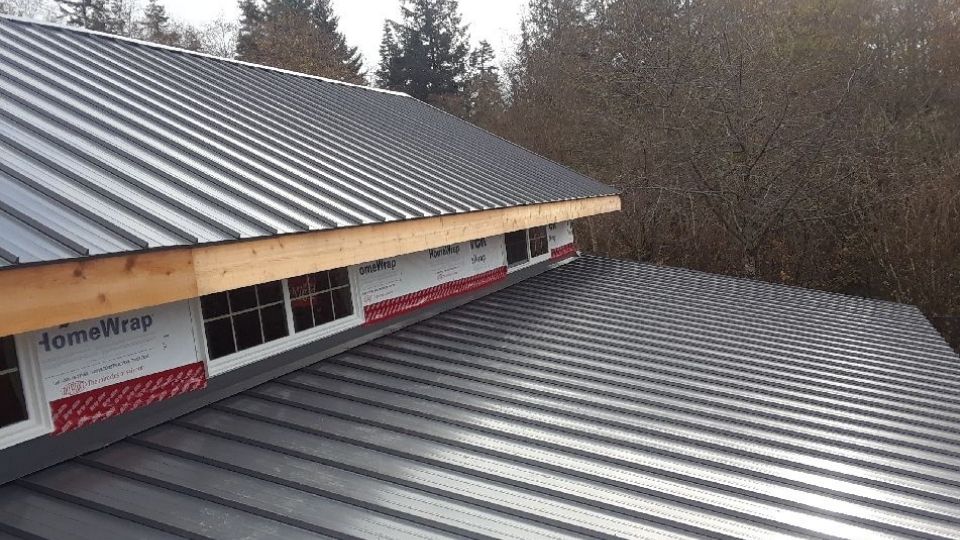
Non-porous roofing materials like metal offer no grip for moss spores. Rain doesn’t pool; it evacuates immediately, especially with a standing seam metal roof, where raised panel seams actively direct water off the surface without giving it anywhere to settle. Add zinc-coated roofing panels to the equation, and you have a surface that biologically resists moss and algae growth at the material level, not because of maintenance, but because of chemistry.
This is the fundamental difference between metal and everything else. Asphalt and cedar don’t just allow moss, they invite it.
Asphalt and Cedar: Why They Lose This Battle
Asphalt roof moss damage is the most common roofing complaint we see in Western Washington. The granular texture that makes asphalt shingles durable against impact is the exact texture that gives moss spores something to grab. Once moisture gets beneath lifted shingles, the decking deteriorates fast.
Cedar shake moss issues are worse. Cedar is organic. Moss doesn’t just grow on it; it consumes it. In shaded neighborhoods on Camano Island, Stanwood, or tree-covered parts of Arlington, cedar shake roofs frequently fail a decade ahead of schedule because the material itself becomes a food source.
Metal Roof vs. Other Materials: A Real Performance Comparison
| Feature | Metal Roofing | Asphalt Shingles | Cedar Shake |
| Moss resistance | Excellent | Poor | Very poor |
| Lifespan in wet climates | 40–70 years | 15–25 years | 15–20 years |
| Maintenance frequency | Low | High | Very high |
| Moisture absorption | None | Significant | High |
| Eco-friendly | Fully recyclable | Landfill waste | Moderate |
The roof lifespan in rainy climates, the gap between metal and traditional materials isn’t marginal; it’s generational. One metal roof outlasts two to three asphalt replacements in the same period.
Can Moss Actually Grow on a Metal Roof?
Technically, in severe shade with heavy debris accumulation, organic material can settle on a metal roof. But it doesn’t penetrate. It doesn’t damage the surface. And it rinses off without any aggressive treatment. This is categorically different from asphalt roof moss damage or cedar shake moss issues, where removal itself causes further harm, pressure washing strips granules from asphalt and splits cedar fibers, accelerating the very damage you’re trying to stop.
Proper installation eliminates even this minor risk. Roof ventilation and moisture management, correct pitch, and clean gutter integration are all part of how a well-installed metal roof stays completely clear of biological growth.
Choosing asphalt in a Pacific Northwest climate isn’t a budget decision. It’s a timeline decision; you’re deciding when you’ll replace it, not if.
Best Types of Metal Roofing for Moss-Prone Homes
Not all metal roofing performs equally in this climate. Here’s what actually matters for roofing in high rainfall areas:
- Standing seam metal roofing: The highest-performing option for wet climates. Concealed fasteners and raised seams eliminate all water-infiltration points. Improved roof drainage performance. It is the go-to for homes prone to moss.
- Aluminum roofing: Good for coastal areas like Camano Island and some areas of Stanwood, where salt air accelerates corrosion. Of course, very rust-resistant without any coatings.
- Zinc-coated steel panels: Practical, durable, and with built-in algae-resistant roofing properties. The zinc inhibits biological growth at the surface level.
How Long Does a Metal Roof Last, And What Affects It?
A properly installed metal roof in the Pacific Northwest lasts between 40 and 70 years, depending on the material and maintenance. For context, most asphalt roofs in this region require replacement at 15 to 20 years due to accelerated mold and moss roof growth and moisture damage. Corrosion-resistant metal roofing systems, particularly aluminum and Galvalume steel, are engineered specifically for sustained moisture exposure, which is exactly what Western Washington delivers year-round.
Wet climate roof maintenance for metal is minimal: annual inspections, clear gutters, and trimmed overhanging branches. That’s genuinely it. No chemical treatments, no annual moss removal, no granule loss to monitor.
How Homeowners Can Maximize Their Metal Roof’s Performance
Metal roofing dramatically reduces maintenance needs, but your surrounding environment still matters. A few habits protect the investment:
- Trim overhanging branches to reduce shade and debris accumulation, the two factors that create any moss risk on any roof material.
- Clean gutters seasonally to prevent water from backing up under your roof edge, which undermines even the best moisture-resistant roof systems.
- Schedule annual inspections to catch flashing issues or sealant wear before they develop into anything significant.
- Improve attic ventilation if your home has moisture buildup issues. Proper roof ventilation and moisture management extend both the roof and structural lifespan.
Are Metal Roofs Worth It? What the Numbers Actually Show
The upfront investment in metal roofing is higher than that in asphalt. The long-term math, however, tells a completely different story. When you account for the number of replacements, recurring roof repair calls, cleaning and treatment costs, and potential structural repairs from moss-driven moisture damage, metal roofing consistently delivers lower lifetime costs in Pacific Northwest climates.
It also contributes meaningfully to home resale value. Buyers in Marysville, Lake Stevens, and surrounding areas increasingly recognize a metal roof as a long-term asset, not just a feature.
As eco-friendly roofing materials gain traction, metal’s recyclability and longevity position it as the most responsible choice for Pacific Northwest roof replacement as well.
Your Roof Has Already Made a Decision: The Question Is Whether You Have
The Pacific Northwest doesn’t give traditional roofing materials a fair chance. The climate, the trees, the year-round moisture, they all work together against asphalt and cedar in ways that are slow, invisible, and expensive by the time they’re obvious. Metal roofing doesn’t ask you to fight that environment. It’s built to outlast it.
For homeowners considering a new roof in Marysville, WA, planning a roof replacement in Lake Stevens, WA, or dealing with recurring moss issues that keep coming back no matter how many times the roof gets cleaned, the answer isn’t another treatment cycle. It’s a material that makes the problem structurally impossible.
S&S Roofing has been providing roof replacement in Marysville, WA, roof repair in Lake Stevens, WA, and comprehensive roof maintenance in Lake Stevens, WA across Snohomish and Island Counties for four generations. As both a trusted roofing contractor in Marysville, WA, and a trusted roofing contractor in Lake Stevens, WA, our team understands what Pacific Northwest roofs actually face, and we install systems built to handle it for decades.
Ready to stop managing moss and start eliminating it? Call S&S Roofing today at 360-502-7718 for a free estimate. Our team serves Arlington, Camano Island, Lake Stevens, Marysville, Stanwood, and the surrounding communities, and we’re ready to help you make a roofing decision you won’t have to revisit for a generation.